Monday, 17 August 2020

Out of the Box Thinking During Covid 19

 I wrote the following article for IUCEE  E-Newsletter May-June 2020. 

Source: https://iucee.org/iucee/iucee-e-newsletter-may-june-2020/

------------------------------------------------------------------------------------------------------------------------------ 


Saturday, 15 August 2020

At 67 This Grandmother Turned to Entrepreneurship, And Her Pizza is Mumbai’s New Favourite

At 67, This Grandmother Turned to Entrepreneurship, And Her Pizza is Mumbai’s New Favourite

Athira Nair

MAKERS India16 August 2020

For most women whose lives are ruled by domestic duties, starting up is the last thing on mind. For Mumbai-based Pratibha Kanoi, 67, having been a homemaker for all her life, entrepreneurship was not even a remote plan. Although she had wished for a source of income for herself, she rarely had a chance to look at employment opportunities after taking care of her husband and her three children.

 Pratibha Kanoi

Pratibha Kanoi

Yet, in the most unlikely of times – when the world is battling the Coronavirus pandemic and the country was going through a nation-wide lockdown – entrepreneurship came calling for this grandmother of four. And it was a surprise in itself – a part of her daily routine that turned into a business opportunity.

Due to the Coronavirus-related lockdown that started in March, and panic about the potential spread of COVID-19, Pratibha was particular about her family –both her sons, their wives and their children who live with her–not having food from outside. To make up for the lifestyle change, she started making their favourite foods at home – including Pizza.

“I am very particular about hygiene; my staff are not even allowed to bring mobile phones into the kitchen. And all vegetables are washed and dried in the Sun for an hour before being used,” says Pratibha, who has never had professional training in cooking.

Impressed by the taste and quality of the Pizza, her sons – Visshaal S Kanoi and Vikaas S Kanoi – encouraged her to put her culinary skills to build a small business. For Pratibha, who had always dreamt of having her own income, this was a golden opportunity. Thus, on May 2, Mommy’s Kitchen was launched, serving vegetarian Pizzas to a clientele that has grown to more than 200 in just three months.

Talking to MAKERS India on a Zoom call recently, Pratibha says, “I have always loved cooking for my family; but I have never dreamt of the such response to my Pizzas. We started with just 10 boxes on day one, with orders mostly from my sons’ friends. In 10 days, we needed  more than 100 boxes! In fact, we started serving Pasta also after customers’ demand.”

Currently getting 30-50 orders per weekday, Mommy’s Kitchen menu includes Pizza varieties like Margherita, Fungi, Primavera, and Diet Pizza, along with Mommy’s Special, as well as Pasta varieties in Aglio E Olio, Spaghetti Arrabbiata, and Cheesy Spaghetti – all priced between Rs.425 and Rs.555. Pratibha makes all ingredients - including the dough for the Pizza base, the gravy, and even the paneer used in Pizzas - herself.  

Pratibha is assisted by her in-house team, including stay-at-home cooks. The delivery (only across Mumbai city) is done via services like Dunzo as well as two dedicated chauffeurs and bikers. Initially, orders had to be placed a day in advance; with larger scale of operations, on-demand service has started too. Pratibha’s daughter – who lives in Bangalore – is the one who is in charge of getting orders online.   

Pratibha’s son Visshaal, who – along with his brother Vikaas – handles the logistics of the business, tells MAKERS India that most orders are for more than one pizza. “Many orders come as our customers’ gifts to their loved ones too; we provide those orders gift-wrapped. We often get orders for small gatherings at home as well. There have been weekends when we have got more than 100 orders in a day,” he adds.

Today, Mommy’s Kitchen’s clientele includes politicians like Devendra Fadnavis and Praful Patel; bureaucrats, industrialists like Rakesh Jhunjhunwala, renowned surgeon Muffazal Lakdawala, and Bollywood celebrities like Sonali Bendre, the Bachchan family, and filmmaker Madhur Bhandarkar, among others.  

For Pratibha, this is the kind of success she had never imagined. Encouraging all women to be part of workforce, Pratibha says, “If your health permits, you should take the plunge (into entrepreneurship). Even if you fail, you know you have tried something you wanted.”

She adds that her children have been extremely supportive of her venture. “But I keep my recipes secretive, and don’t even share it with my children for fear of it leaking,” she signs off with a laugh.


Source:

https://in.makers.yahoo.com/at-67-this-grandmother-turned-to-entrepreneurship-and-her-pizza-is-mumbais-new-favourite-030013824.html

Hyderabad-based startup Skyroot Aerospace’s Raman: India’s first homegrown rocket engine


Hyderabad-based startup Skyroot Aerospace’s Raman: India’s first homegrown rocket engine

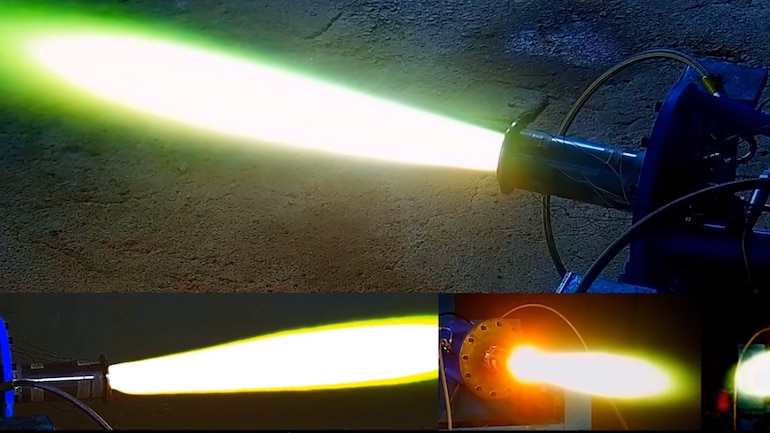
Skyroot Aerospace successfully test-fired an upper-stage rocket engine, becoming the first privately-owned Indian firm to demonstrate the capability to build a homegrown rocket engine.


Skyroot Aerospace's homegrown Raman Engine test firing
Skyroot Aerospace's homegrown Raman Engine test firing (Picture Courtesy: Youtube @ Skyroot Aerospace)

Telangana Minister KT Rama Rao on Friday met the founding team of Skyroot Aerospace, a Hyderabad-based Aerospace startup.

Skyroot Aerospace successfully test-fired an upper-stage rocket engine, becoming the first privately-owned Indian firm to demonstrate the capability to build a homegrown rocket engine.

While congratulating the team from Skyroot Aerospace, Minister KTR also assured them of all possible assistance from the Telangana state government.

In a tweet on Friday, KTR's Department wrote, "Minister @KTRTRS met with founding team of @SkyrootA - A Hyderabad based Aerospace startup, which has successfully test fired an upper-stage rocket engine, becoming the first Indian pvt firm to demonstrate the capability to build a homegrown rocket engine."

Pawan Chandana, Chief Executive Officer (CEO) of Skyroot Aerospace along with Chief Operating Officer (COO) Bharath Daka and Senior Vice President Vasudevan Gnana Gandhi and Director (Electronics) Sujai Karampuri were part of the delegation that met the minister.

In its Twitter bio, Skyroot Aerospace describes its mission as "Democratizing Space Access". It posted a video on August 13 of its Raman Engine test firing describing it as 100% 3D Printed Injector, Metal-Matrix Composite throat, Multi-start capability, Long duration mission support."

The firm went on to say that it dedicates the Engine to the recent space reform initiated by Prime Minister Narendra Modi and Finance Minister Nirmala Sitharaman.


Source: 

https://www.indiatoday.in/india/story/hyderabad-based-startup-skyroot-aerospace-s-raman-india-s-first-homegrown-rocket-engine-1711254-2020-08-14


Wednesday, 8 April 2020

Delhi school invent robot to help medical workers and Covid-19 patients reduce contact

Delhi school invent robot to help medical workers and Covid-19 patients reduce contact

This Delhi student has invented robot to help medical workers and to reduce contact with Covid-19 patients.

Coronavirus has created havoc across the world with rising number of cases. Amid growing concerns over the spread of the novel coronavirus among medical professionals, KIIT World School Pitampura 12th standard students Nishant Chandna (15), Saurav Maheshkar (16) has invented a robot Called Prithvi’ that could help reduce contact between healthcare workers and Covid-19 patients. Student conceptualized, designed and built the robot after the Narendra Modi government announced a nationwide lockdown in an attempt to curb the spread of the virus.

Combat Coronavirus: How does the robot work?

Nishant Chandna said A number of medical staff including doctor and nurses in India who were infected while treating patients. We wanted to design something that would help protect those at the frontline battling this illness, so we put our heads together and designed this robot, the robot is designed to dispense food and medicine to patients, and is controlled remotely through an app downloaded on a Smartphone. A smart tablet can also be attached to the robot, enabling video conferencing between doctors and patients. We’re also considering adding an additional feature, in the form of a temperature gun. That way patient can check their own temperature, minimizing the risk to doctors and nurses.

Combat Coronavirus: Structure of robot created by school children

The prototype of Prithvi’ is made of cardboard, a programmable board and basic motors, and cost less than Rs 5,000 to build. However, if it does get made on a mass scale, it would require a sturdier build. Dubey conceptualized the robot, Chandna built it, and Maheshkar contributed to its software development.

Source:
https://www.indiatoday.in/education-today/news/story/delhi-school-invent-robot-to-help-medical-workers-and-covid-19-patients-reduce-contact-1664791-2020-04-08

Wednesday, 19 July 2017

Sohum made in India low-cost hearing screening device for newborns launched


Sohum, made in India low-cost hearing screening device for newborns launched

SOHUM, an indigenously developed newborn hearing screening device has been launched by the Union Ministry of Science and Technology.

SOHUM, an indigenously developed newborn hearing screening device has been launched by the Union Ministry of Science and Technology. The aim is to make this battery-operated non-invasive device available across India to cater to nearly 26 million babies that are born every year in India.

Early screening will help minimising or reversing the damage that is caused by hearing loss
This innovative medical device has been developed by the School of International Biodesign (SIB) start-up Sohum Innovation Labs India Pvt Ltd under the Department of Biotechnology (DTB).

More about SOHUM:

·       Sohum is a low-cost portable device which uses brain-stem auditory evoked response, a best screening choice recommended by the American Association of Pediatrics and National Health Services of UK

·       It measures auditory brain waves via three electrodes placed on the baby's head

·       When stimulated, electrodes detect electrical responses generated by the brain's auditory system. If there is no response, it indicates child cannot hear

·       Once it is detected at quite an early age, measures can be taken to prevent other problems such as impaired communication skills and even possible mental illness

·       It is battery operated device and is non-invasive, it doesn't require babies to be sedated, which is risky, testing in process at present

·       It has in-built algorithm that filters out ambient noise from the test signal. This is important because health clinics can be crowded and noisy

What is School of International Biodesign?

SIB is a flagship Program of the DBT aimed to develop innovative and affordable medical devices as per India's unmet clinical needs and to train the next generation of medical technology innovators in India. It is implemented jointly at All India Institutes of Medical Sciences (AIIMS) and IIT Delhi in collaboration with International partners.

Biotech Consortium India Limited manages techno-legal activities of the Program, which serves as a valuable contribution to the Make in India campaign by the Government. 
Source:

http://indiatoday.intoday.in/education/story/sohum-made-in-india-hearing-screening-device/1/1005911.html

Monday, 3 July 2017

Line inspector creates electrical map of his town


Custom app helps linemen speedily find and repair faults in Khammam

Kilaru Nageswara Rao is a line inspector with the Northern Power Distribution Company of Telangana. He has spent 20 years inspecting electricity lines, and knows the job, literally, from the ground up to the top of the 25- to 35-foot poles on which electricity wires rest.


A few years ago, Mr. Rao devised a low-cost tool — footwear in a metal frame that holds onto the poles — to help line men climb them easily and safely.

From hardware, he has now put his creativity to work using digital tools. He recently developed a prototype of mobile app he calls Google Electrical Map.

Khammam has 10 electricity sub-stations, 29 feeders, 1150 Distribution Transformers, and 10,000 electricity poles; using Google’s map-making tool, Mr. Rao plotted and colour-code them all.


Kilaru Nageswara Rao climbs an electricity pole using an improvised device.


Prevents accidents

The app allows field staff to swiftly locate faults and reach them quickly, so that the town’s 55,000 consumers don’t suffer long when things go wrong.

The app has many uses, he says; for instance, assessing loads, minimising power interruption and line losses, and preventing accidents during breakdown services. He plans to upgrade the app to help field staff in other areas harness its benefits too.

In March, Mr. Rao and his app basked in the limelight at the Rural Innovators and Startup Conclave in Hyderabad in March this year, and then at the Innovation Festival 2017 in Tirupati in Andhra Pradesh.

“I have experienced myself the challenges of climbing tall electricity polls, working on them close to the electricity lines and locating the faulty lines in the vast power distribution network,” he says.

“This has prompted me to find tangible solutions to the recurring challenges.”

Source:
http://www.thehindu.com/todays-paper/tp-national/tp-andhrapradesh/line-inspector-creates-electrical-map-of-his-town/article19206986.ece


Wednesday, 14 June 2017

These easy to assemble toilets developed by CSIR will be a boon to areas without toilets


These easy to assemble toilets developed by CSIR will be a boon to areas without toilets
Chennai's CSIR-SERC came up with an easy to assemble toilet that could solve all the problems regarding lack of toilets in the interior regions of India.
 (Representational image)
The Council for Scientific and Industrial Research and Structural Engineering Research Centre (CSIR-SERC) in Chennai has come up with an easy to assemble toilet that could reach interiors of India where there are a severe lack of toilets.
More about the easy to assemble toilets:
·       The toilet can be assembled in less than 5 hours
·       It will weigh less than 500kg
·       The toilet is made with a textile reinforced concrete (TRC) panels developed by CSIR
·       The life span of the toilet would be around 25-30 years
·       These sheets vary in thickness from 15mm to 25mm and there is absolutely no need for moulds in order to prepare these sheets
·       These sheets are corrosion free and are able to hold in rough winds; so, these sheets will withstand every kind of weather
·       For now, each toilet costs between Rs 12,000 and Rs.15,000. With buildtex-the textile used in building applications--being manufactured in India, the cost is expected to come down.
As reported by The Hindu, on Saturday a memorandum of understanding was signed between CSIR-SERC and Smart Build Prefab Pvt. Ltd, Hyderabad for the transfer of manufacturing TRC panels required for the construction of such toilets.
The TRC panels can also be used as flooring, roofs, doors, walls, etc. The sheets are reinforced using a glass textile mesh along with a grained cementious binder. It was in 2014 that the CSIR-SERC applied for a patent for this versatile piece of technology.
This memorandum is said to have been signed during the foundation day programme of CSIR-SERC, which was presided over by Santosh Kapuriya, Director, CSIR-SERC.
About CSIR:
CSIR is an autonomous body and India's premiere research and development (R&D) organisation. Its other activities include research in structural engineering, life sciences, chemicals, aerospace engineering, ocean sciences, mining, leather, food, petroleum and environment.The CSIR laboratories have achieved expertise in structural components, design and testing of structure and analysis. It's primarily funded by the Union Ministry of Science and Technology. The services are sought by the union, state as well as public and private sector undertakings.
 
Source: